

Islamic Clothing Market to Reach US$ 153.6 Billion by 2033 Driven by Rising Demand for Modest Fashion and Digital Retail
Islamic Clothing Market
Middle East & Africa leads with about 41% market share in 2026, driven by GCC demand, high incomes, and strong premium Islamic fashion spending.
LONDON, UNITED KINGDOM, August 5, 2026 /EINPresswire.com/ -- The global Islamic Clothing Market is witnessing remarkable growth as modest fashion continues to gain popularity across both Muslim and non Muslim consumers. Increasing awareness of cultural diversity, changing fashion preferences, and the influence of social media have transformed Islamic clothing into a dynamic segment of the global apparel industry. Today, consumers seek garments that combine modesty, comfort, elegance, and contemporary designs, encouraging brands to introduce innovative collections for different age groups and occasions.
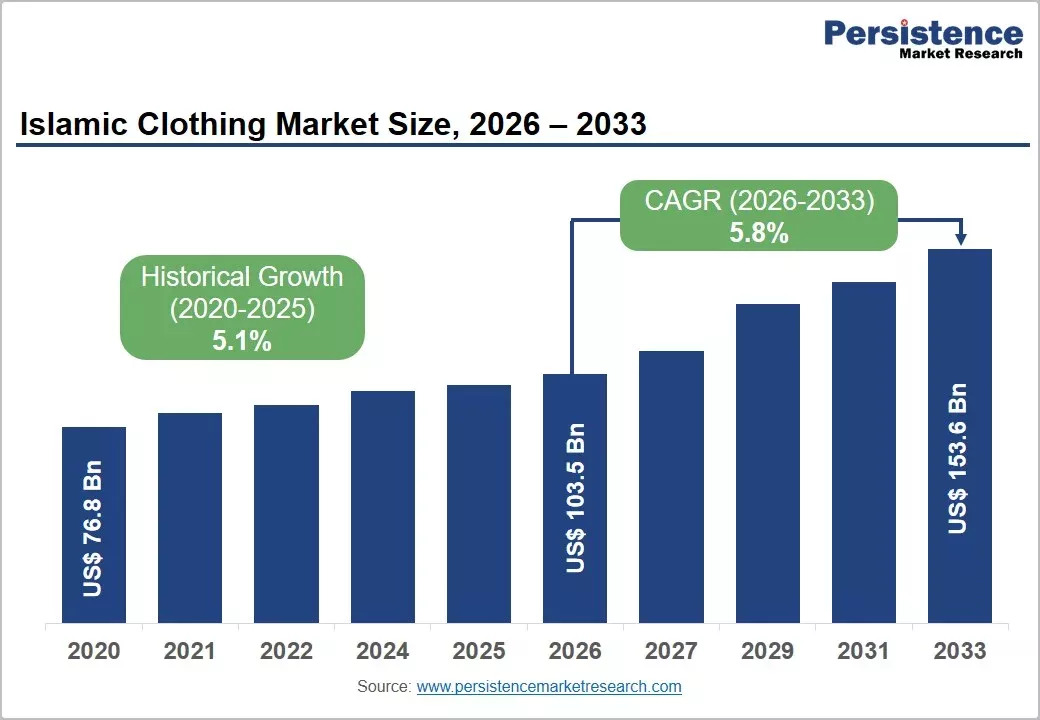
According to the latest study by Persistence Market Research, the global Islamic Clothing market size is expected to be valued at US$ 103.5 billion in 2026 and is projected to reach US$ 153.6 billion by 2033, growing at a CAGR of 5.8% between 2026 and 2033. Rising demand for fashionable modest wear, expanding online retail platforms, and increasing purchasing power in emerging economies continue to support long term market expansion.
Download Your Free Sample & Explore Key Insights: https://www.persistencemarketresearch.com/samples/37305
Growing Popularity of Modest Fashion
Modest fashion has evolved beyond traditional clothing and has become a global lifestyle trend. Designers are introducing stylish collections that appeal to consumers seeking both cultural authenticity and modern aesthetics. Fashion events dedicated to modest wear, collaborations between international designers and Islamic fashion brands, and the growing presence of influencers have significantly increased the visibility of Islamic clothing worldwide. Consumers now have access to diverse clothing options that combine premium fabrics, attractive colors, and elegant designs while maintaining modest dressing principles. This evolution has helped Islamic clothing gain acceptance across international fashion markets.
Expansion of Online Retail Channels
The rapid growth of electronic commerce has become one of the strongest drivers for the Islamic clothing market. Online platforms provide consumers with access to extensive product collections, competitive pricing, and convenient shopping experiences regardless of location. Digital marketing, influencer collaborations, and personalized shopping experiences have enabled brands to reach wider audiences across different countries. Online stores also offer detailed size guides, customer reviews, and flexible return policies, encouraging greater consumer confidence in purchasing Islamic clothing through digital channels.
Rising Demand for Premium and Sustainable Clothing
Consumers are increasingly looking for premium quality Islamic clothing made from comfortable and environmentally responsible fabrics. Natural fibers, sustainable manufacturing practices, and ethical sourcing have become important purchasing considerations. Brands are responding by introducing eco friendly collections made from cotton, recycled materials, and responsibly sourced fabrics. Sustainable production not only enhances brand reputation but also aligns with the preferences of environmentally conscious consumers who value responsible fashion choices.
Product Innovation and Design Trends
Innovation continues to shape the Islamic clothing market as manufacturers focus on balancing tradition with contemporary fashion. Designers are creating versatile garments suitable for everyday wear, professional settings, religious occasions, and formal events. Innovative features such as wrinkle resistant fabrics, lightweight materials, breathable textiles, and easy care garments improve consumer convenience. Seasonal collections, luxury modest fashion, and customized clothing options further strengthen market competitiveness.
Customize This Report for Your Exact Requirements: https://www.persistencemarketresearch.com/request-customization/37305
Market Segmentation
By Product Type
• Hijab & Head Coverings
• Abayas & Cloaks
• Modest Dresses & Tunics
• Islamic Prayer Wear
• Men’s Islamic Clothing
• Children’s Islamic Clothing
• Others
By Fabric Type
• Cotton
• Polyester
• Chiffon
• Silk
• Others
By End-user
• Women
• Men
• Children
By Distribution Channel
• Online
• Offline
By Region
• North America
• Europe
• East Asia
• South Asia & Oceania
• Latin America
• Middle East & Africa
Report Highlights
• Market Forecast and Trends
• Competitive Intelligence and Share Analysis
• Growth Factors and Challenges
• Strategic Growth Initiatives
• Pricing Analysis
• Future Opportunities and Revenue Pockets
• Market Analysis Tools
Regional Market Outlook
The Middle East and Africa continue to dominate the Islamic clothing market due to a large Muslim population, strong cultural traditions, and high consumer spending on modest fashion. The region remains a major hub for premium Islamic apparel and luxury modest fashion brands.
South Asia and Oceania represent another significant market driven by expanding populations, rising disposable incomes, and increasing awareness of branded Islamic clothing. Countries such as Indonesia, Malaysia, and Pakistan continue to witness strong demand for fashionable modest wear.
North America and Europe are experiencing steady growth as multicultural populations expand and modest fashion gains mainstream acceptance. International retailers are increasingly incorporating modest clothing collections into their product portfolios to cater to diverse customer preferences.
Challenges and Future Opportunities
Despite its positive outlook, the Islamic clothing market faces challenges including intense competition, fluctuating raw material prices, and changing consumer preferences. Maintaining product affordability while delivering premium quality remains a key challenge for manufacturers. However, the market offers significant opportunities through digital innovation, sustainable manufacturing, product customization, and expansion into emerging economies. Investments in advanced textile technologies and inclusive fashion collections are expected to create new revenue streams for market participants during the forecast period.
Checkout Now & Download Complete Market Report:
https://www.persistencemarketresearch.com/checkout/37305
Company Insights
Leading companies operating in the Islamic Clothing Market include:
✦ Aab Collection
✦ Modanisa
✦ Sunnah Style
✦ SHUKR Islamic Clothing
✦ East Essence
✦ Inayah
✦ Annah Hariri
✦ Haute Hijab
✦ The Hijab Company
✦ Voile Chic
✦ Louella
✦ Niswa Fashion
✦ Veiled Collection
✦ Hijab House
✦ Amani Boutique
✦ AlHannah Islamic Clothing
✦ Modestreet
✦ Bokitta
Conclusion
The Islamic Clothing Market is set to witness sustained growth over the coming years as modest fashion continues to gain global recognition. Rising consumer awareness, increasing digital retail penetration, and growing demand for premium and sustainable clothing are expected to drive market expansion through 2033. As brands continue to innovate with modern designs, eco friendly fabrics, and enhanced online shopping experiences, the market will create significant opportunities for manufacturers, retailers, and investors.
Explore More Related Reports :
Reusable Sanitary Pads Market
Europe keratin market
Persistence Market Research
Persistence Market Research Pvt Ltd
+1 646-878-6329
email us here
Visit us on social media:
LinkedIn
Instagram
YouTube
X
Legal Disclaimer:
EIN Presswire provides this news content "as is" without warranty of any kind. We do not accept any responsibility or liability for the accuracy, content, images, videos, licenses, completeness, legality, or reliability of the information contained in this article. If you have any complaints or copyright issues related to this article, kindly contact the author above.
